A cost-effective combined advanced therapy to treat knee osteoarthritis
SINPAIN Results
Advancing osteoarthritis research: understanding the disease, developing innovative therapies and improving how osteoarthritis is assessed.
Over the course of the SINPAIN project, researchers have worked together to better understand the mechanisms driving osteoarthritis and explore new approaches to its treatment. From identifying cellular processes involved in inflammation and pain to developing nanotherapeutic solutions, advanced disease models and AI-supported imaging methods, the project has generated scientific insights and tools that can support future osteoarthritis research.
Discover the main achievements of SINPAIN in our results article and explore the research behind them through interviews with project researchers.
Main results article
A connected overview of the scientific findings, developments and future perspectives.
Developing New Approaches to Osteoarthritis Treatment
Fundación CIDETEC
How can innovative therapies help address inflammation and pain in osteoarthritis?
In this Results interview, Damien Dupin, SINPAIN project coordinator from CIDETEC discusses the development of an injectable hydrogel designed to deliver therapeutic agents directly into the knee joint. They also share insights into the project's work on understanding osteoarthritis progression, the challenges of obtaining relevant patient samples and the importance of engaging with people living with the disease.
Discover how SINPAIN is contributing to the development of new approaches for osteoarthritis research and treatment.
Targeting Inflammation and Pain with Nanotechnology
i3S - Institute for Research and Innovation in Health
Can tiny particles help researchers develop new ways to address osteoarthritis?
In this SINPAIN Results interview, Meriem Lamghari from i3S explains their work on lipid nanoparticles designed to deliver small interfering RNA (siRNA), a technology that can reduce the production of specific proteins.
The research focuses on two biological factors involved in osteoarthritis: interleukin-1 beta (IL-1β), associated with inflammation, and nerve growth factor (NGF), associated with pain.
Discover how SINPAIN is exploring nanotechnology as a potential approach to targeting the mechanisms underlying osteoarthritis.
Understanding the Link Between Inflammation and Pain
University of Eastern Piedmont (UPO)
What happens inside the joint when osteoarthritis causes inflammation and pain?
In this SINPAIN Results interview, Annalisa Chiocchetti from the University of Eastern Piedmont explains how advanced single-cell technologies have helped identify specific cell populations involved in both processes.
Their findings reveal how different cells contribute to the production of interleukin-1 beta (IL-1β) and nerve growth factor (NGF), two important biological factors associated with inflammation and pain. These insights helped inform the development of nanotherapeutic approaches targeting both mechanisms.
Recreating the Human Joint to Test New Therapies
AO Research Institute Davos (ARI)
How can researchers study potential osteoarthritis treatments in a laboratory environment that better reflects the human joint?
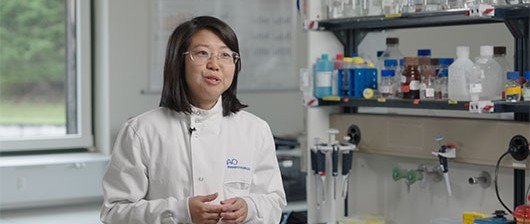
In this SINPAIN Results interview, Zhen Li, Sibylle Grad and Huan Meng from AO Research Institute Davos (ARI) explain how they developed advanced three-dimensional human cell models that reproduce important features of osteoarthritis.
By combining different joint cell types with inflammatory conditions and mechanical forces, these models allow researchers to investigate how joint tissues interact and respond to potential nanotherapeutic treatments.
The approach provides a valuable tool for preclinical research and could help reduce the need for animal testing in future therapeutic development.
Testing New Osteoarthritis Therapies: Why Realistic Disease Models Matter
Saarland University
How can researchers assess whether new therapeutic approaches could work in people with osteoarthritis? Within SINPAIN, clinically relevant disease models help investigate how potential treatments behave in affected joints and support their further development. Henning Madry and Magali Cucchiarini from Saarland University explain why these preclinical models are important for bridging the gap between laboratory findings and future clinical research.
Why is it important to validate new treatments, such as nanotherapeutic approaches, in clinically relevant osteoarthritis models?
Magali Cucchiarini:
Validating novel treatments, including nanotherapeutic approaches, in clinically relevant osteoarthritis models is a critical step toward successful translation in osteoarthritic patients. These models allow us to evaluate how therapies behave in an affected in vivo joint environment that closely mimics human osteoarthritis, providing relevant and reliable information about efficacy, safety, and long-term outcomes.
They also help us understand whether our delivery platforms can effectively reach target tissues and produce sustained therapeutic effects. Without such validation, it is difficult to predict whether promising laboratory findings may translate into meaningful clinical benefits.
What has been the most exciting result so far?
Henning Madry:
From the perspective of a translational clinician-scientist, the most exciting result is to monitor the early progression of the disease and see how it affects the cartilage and the adjacent bones. The chosen model of anterior cruciate ligament tear is especially clinically relevant for younger patients, as they may develop osteoarthritis early in their life as a consequence.
Magali Cucchiarini:
From the perspective of a molecular biologist, the most exciting result is to see how the treatments impact the animal model and what we can technically learn from the outcomes.
How do these findings help validate new treatments for people with osteoarthritis?
Henning Madry:
Research using rabbit models helps bridge the gap between laboratory findings and clinical reality in humans. Compared with small animal models, rabbits have joint anatomy, cartilage thickness, and biomechanical characteristics that more closely resemble those of the human knee, making them particularly valuable for evaluating osteoarthritis therapies.
Magali Cucchiarini:
For novel treatments such as gene therapies and nanotherapeutic approaches, the current model allows us to monitor efficacy but also safety, biodistribution, dosing, and long-term therapeutic effects in a clinically relevant environment. These studies provide critical insights into how the treatments interact with the cartilage, the synovial tissue, and the whole joint.
Both:
Showing that a therapy can protect, remodel, or regenerate joint tissues in a model that adeptly mimics human osteoarthritis, studies in rabbits support a future translation to a clinical trial. Overall, they play a crucial role in reducing uncertainty and increasing confidence that promising preclinical results may lead to meaningful benefits for people living with osteoarthritis.
Improving Osteoarthritis Assessment with AI and Medical Imaging
Reykjavik University
How can artificial intelligence help researchers better understand osteoarthritis progression?
In this SINPAIN Results interview, researchers from Reykjavik University explain how they combine magnetic resonance imaging (MRI), computed tomography (CT) and artificial intelligence (AI) to develop more objective methods for assessing cartilage degeneration.
By analysing information about both soft tissues and bone, the approach helps identify relevant characteristics of osteoarthritis that may be difficult to recognise using conventional assessment methods.
Discover how this research could contribute to more precise disease assessment and support future personalised treatment strategies.